A brief history of the neighbourhood
The main feature of Rue Mouffetard is its non-rectilinear configuration, between Rue Thouin to the north and the square that extends from the front of Saint-Médard church and, since 2016, has been known as Place Georges Moustaki, towards which Rue Mouffetard, Rue Pascal, Rue Édouard-Quénu, Rue de Bazeilles and Rue Censier all converge. Around Rue Mouffetard is a network of streets whose configuration has survived since medieval times, in stark contrast to the continuous, regular urban fabric formed along the major thoroughfares that were opened in the 19th century, including Boulevard Saint-Michel and Boulevard Saint-Germain.
Although Rue Mouffetard has retained its configuration, its environment and overall position within the urban fabric were drastically altered in the 1860s, particularly when Rue Monge was opened in 1859. Avenue des Gobelins, opened in 1869, covered the southern portion of Rue Mouffetard, which had previously extended as far as Barrière d’Italie (today’s Place d’Italie). Place de la Contrescarpe, opened in the urban fabric in 1852, also became, as of that year, a major contributor to the street’s appearance.
A popular shopping area
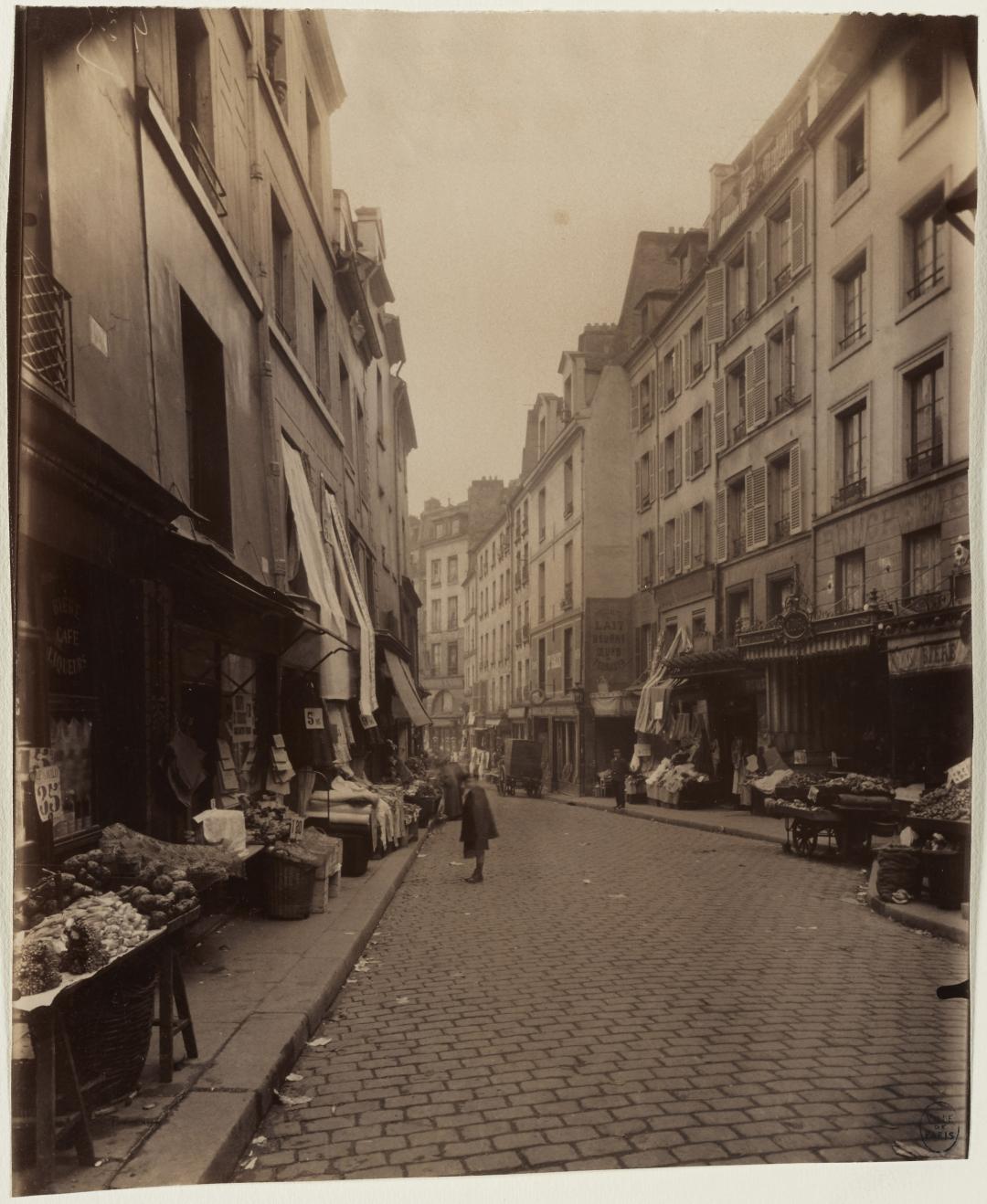
At the time of the sign’s creation, at the turn of the 19th and 20th centuries, Rue Mouffetard was renowned for its shops. Here is how Gustave Pessard described it in his Nouveau dictionnaire historique de Paris, published in 1908: “Rue Mouffetard has retained a very unusual and ancient appearance; filled with shops, it is one of the best-supplied streets in Paris; there are over 60 wine merchants, caterers, roasters, restaurants and pastry shops; 15 grocers and fruit merchants; dairies, ordinary and horsemeat butchers, delicatessens, tripe shops, and so on. You can find everything, and everything is condensed into a small space. And that is exactly what suits the numerous inhabitants of this old and interesting street in the old Saint-Marceau neighbourhood”.
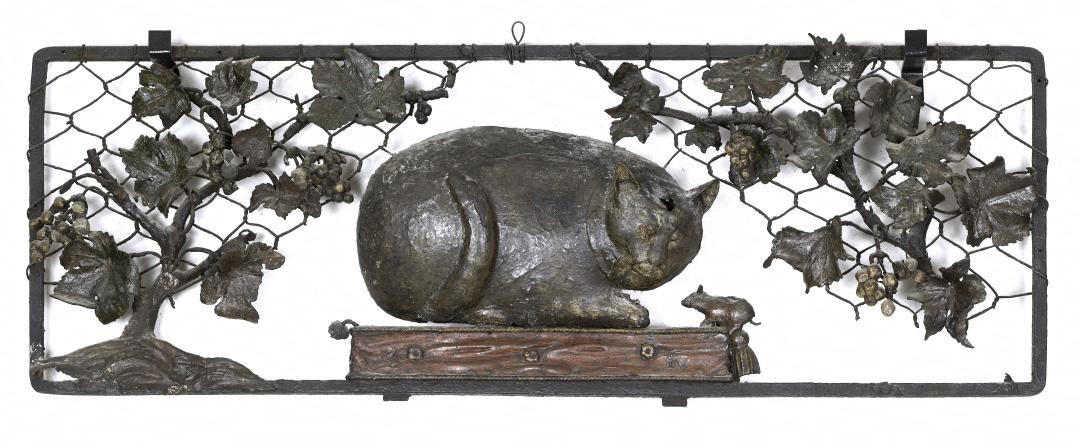
It was precisely this popular atmosphere, teeming with activity, that Eugène Atget captured in a series of photos taken on and around Rue Mouffetard around 1905-1910, of which the Carnavalet Museum holds several prints. The commercial history of the street is also represented in the museum’s collections by several signs.